Why Used Rotary Engines Still Power the Best Mazda Builds
If you have ever stood next to an RX-7 with a fresh tune, you know the sound. It is not like a piston engine. It is smoother, higher, and builds in a way that feels almost electric. That character comes from the Wankel engine design, a layout that Mazda made its own for nearly half a century. But here is the thing: Mazda stopped making new rotary engines after the RX-8 ended production in 2012. That leaves anyone who wants to build, restore, or keep one of these cars on the road with one real option: used rotary engines.
Some people hear "used" and think worn out, but that is not the full story. A used rotary engine from a properly maintained Mazda can still deliver strong compression, healthy injection timing, and a lot of miles if you choose the right core. The trick is knowing what to look for and where the common problems hide. This article covers what matters when you are hunting for a used rotary engine, what to check before you buy, and how the different generations compare.
The Rotary Difference
Before getting into the used market, it helps to understand what makes these engines different. A rotary engine has no pistons, no valves, and no conventional crankshaft. Instead, a three-sided rotor spins inside an epitrochoidal housing. That motion produces power on every rotation, not every other stroke like a piston engine. The result is a compact, lightweight powerplant that revs freely and delivers a flat torque curve.
Mazda refined this design through the 1970s, 80s, and 90s, and by the time the Renesis appeared in the RX-8, the engine had side intake ports and a dual-injection system that improved fuel economy and reduced emissions. But even earlier engines, like the 12A and 13B, have their own loyal fans because of how they respond to turbo and exhaust work. The Wankel engine is not just a novelty. It is a genuine alternative to the piston engine, and it has a racing pedigree that few other designs can match.
Why the Used Market Exists
Mazda produced rotary engines for the Mazda RX-7, Mazda RX-8, Mazda RX-3, and even the Eunos Roadster in limited forms. But production ended years ago. New old stock parts exist, but they are expensive and getting harder to find. That is where used rotary engines become the backbone of the community. A well-sourced used engine can be rebuilt, refreshed, or run as-is for years. It is also a fraction of the cost of a new crate engine from Japan.
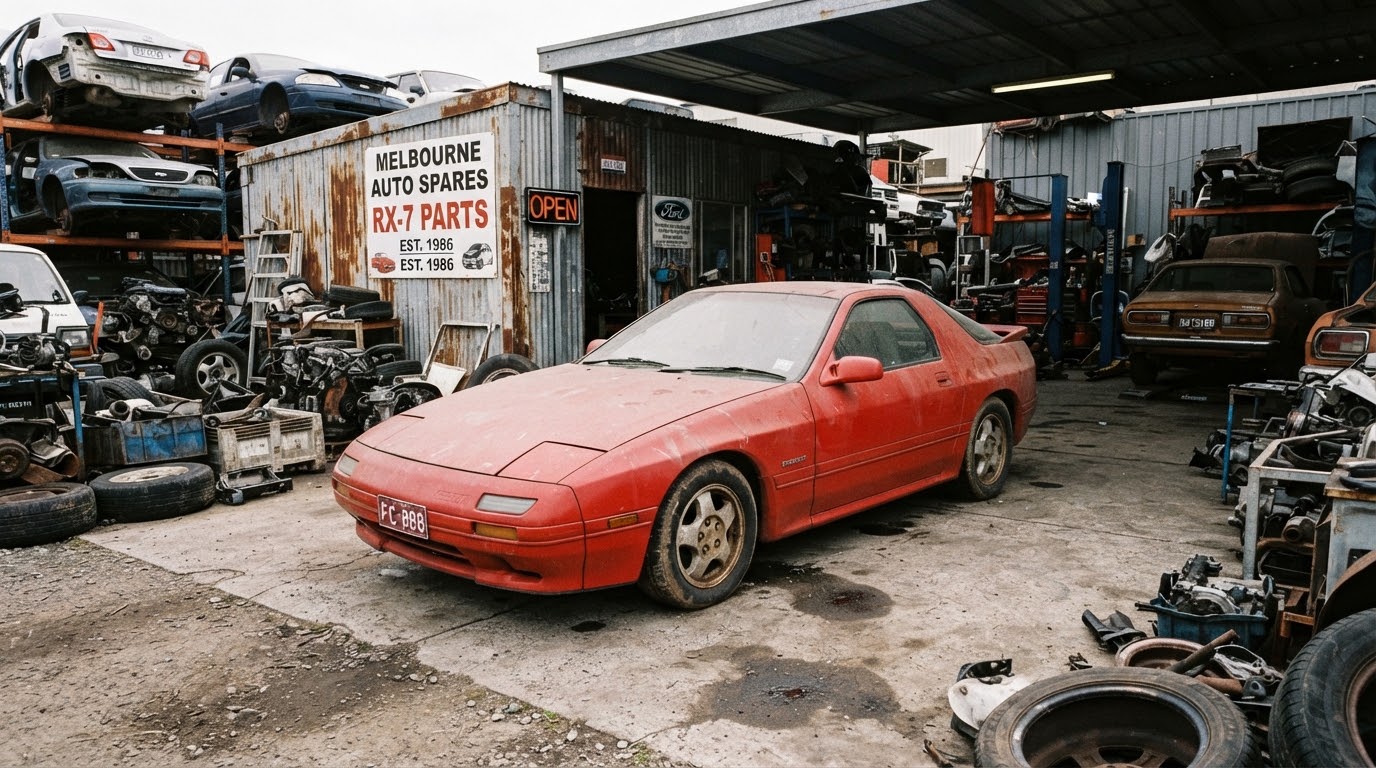
The other reason the used market thrives is that many enthusiasts buy a project car with a seized or tired engine, pull a better core from a wrecker, and swap it in. That keeps cars like the Mazda RX-7 and Mazda RX-8 alive long after the factory stopped supporting them. The same goes for the Mazda RX-3, though those are rarer and parts supply is tighter.
What to Check Before Buying Used Rotary Engines
When you are evaluating used rotary engines, start with the compression numbers. Rotary engines lose compression over time, and once the apex seals wear down, the engine will not start hot or run smoothly. A compression test tells you the condition of the seals and the wear on the housing surface. Look for readings above 90 psi on all three faces of each rotor, and make sure the variation between faces is less than 10 percent.
Next, check the injection system. Early engines used a simple mechanical fuel pump and a distributor, but later models like the Renesis in the RX-8 have a complex injection system that relies on precise timing from the ECU. If the injection system has been tampered with or is missing parts, the engine will run lean and can damage the housing quickly.
Examine the cooling system too. Rotary engines run hot by nature, and any history of overheating can warp the housings. Look for signs of rust, scale, or corrosion in the coolant passages. If the engine has been sitting for years with water in the system, the internal passages may be blocked.
Finally, check the exhaust ports. Early 12A engines had small exhaust ports that limited top-end power, while later 13B engines had larger ports that improved flow. But aftermarket porting is common, so verify what you are getting. A poorly done port job can destroy the engine’s ability to hold compression and make it impossible to tune.
Generations Compared
Different Mazda rotary generations suit different builds. Here is a quick breakdown:
- 12A (RX-3, early RX-7): Simple, reliable, and easy to work on. Lower power output but very forgiving. Good for a first build or a restoration.
- 13B (RX-7, some RX-8 variants): The most common rotary engine. Available in naturally aspirated and turbo forms. Responds well to turbo and intercooler upgrades.
- Renesis (RX-8): Side-port design with improved injection. Higher specific output but more sensitive to oil quality and cooling. Prone to carbon buildup in the exhaust if driven gently.
Each generation has its own quirks, but the 13B is the sweet spot for most builders because parts are plentiful and the aftermarket support is strong. You can find used rotary engines from the 13B family in many wreckers across Australia, and they usually need less work than a 12A or a Renesis to get running again.

Common Myths About Used Rotary Engines
There are a few persistent myths that scare people away from used rotary engines. One is that they wear out faster than piston engines. In reality, a well-maintained rotary engine can last 150,000 km or more. The problem is that many owners neglect oil changes, run low on coolant, or let the engine overheat. Those failures are not the engine’s fault.
Another myth is that used rotary engines cannot be rebuilt. That is false. Most housing surfaces can be refinished if the damage is not too deep. Apex seals, springs, and gaskets are all available from specialist suppliers. A full rebuild on a used core costs less than a new engine and gives you a fresh life for the car.
And some people think that only Mazda made rotary engines worth owning. While Mazda is the most famous, other companies like Mitsubishi, Nissan, Toyota, and even Volkswagen experimented with the Wankel design. Mitsubishi built a small number of rotary-powered cars in the 1970s, and Toyota used a rotary engine in the early prototypes of the Corolla. But Mazda is the only one that mass-produced them for decades, so the parts and knowledge base are deeper for Mazda rotaries.
Where to Find Used Rotary Engines
Specialist wreckers are the best source. They already have the engines pulled, inspected, and often tested. They can tell you what model, what year, and whether the engine has any known issues. General wreckers may not know the difference between a 13B and a 12A, and they might not have checked the compression.
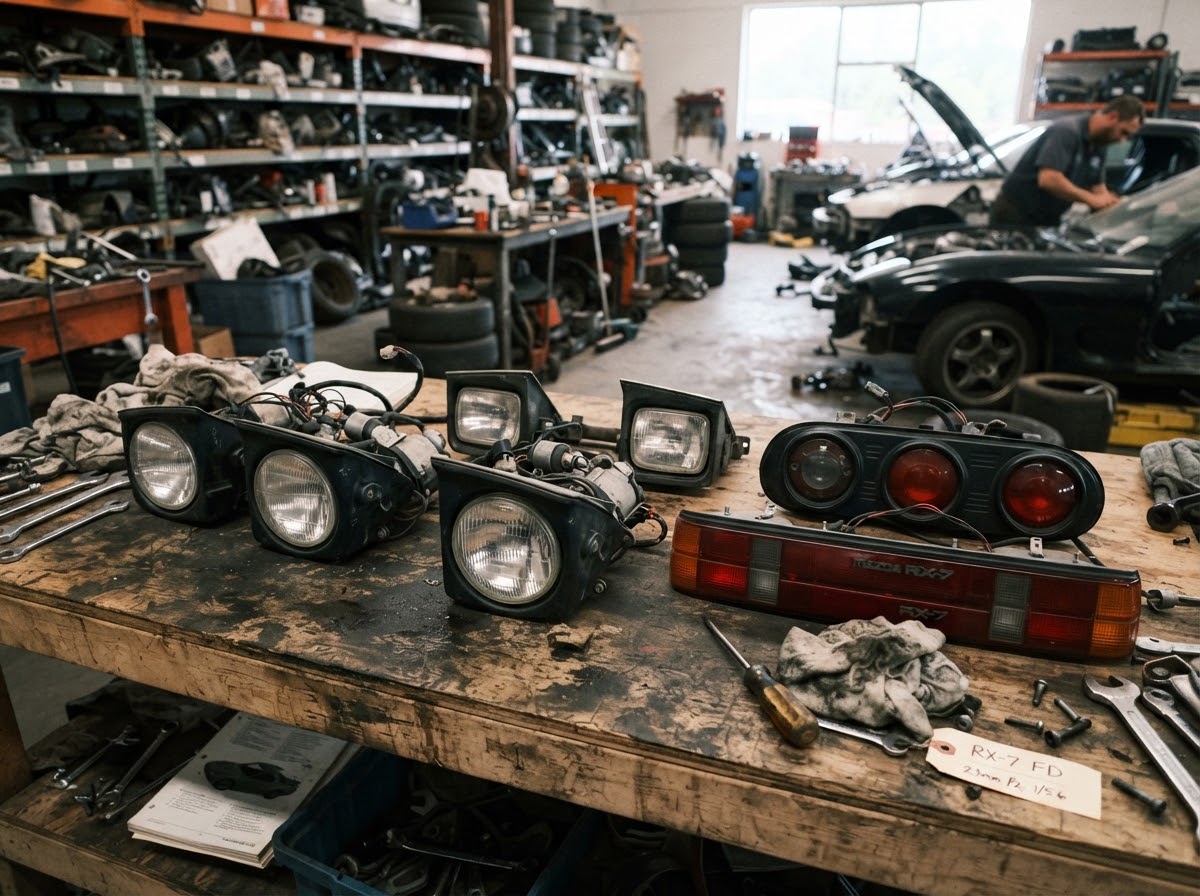
Online forums and Facebook groups dedicated to Mazda RX-7 and Mazda RX-8 are also good places to find used rotary engines. Enthusiasts sell engines they pulled for an upgrade or a swap, and they usually know the history. Just be prepared to ask for a compression test result and photos of the engine before you send money.
If you are in Australia, there are several specialist rotary wreckers in Melbourne and Sydney that stock a steady supply of used rotary engines from Mazda RX-7, Mazda RX-8, and Mazda RX-3 cars. They can also source parts like injection components, turbos, intercoolers, and exhaust manifolds. Building a rotary car from a used core is realistic if you have a good source for parts.
Final Thoughts on the Used Market
The used rotary engine market is not a consolation prize. It is the primary way people keep these cars alive. Without a steady supply of used cores, the Mazda rotary community would shrink fast. As long as there are wreckers pulling engines from old Mazda RX-7s and Mazda RX-8s, there will be a path to keep those cars on the road.
If you are considering a rotary build, start with a used engine that has good compression, a clean cooling system, and an intact injection setup. Factor in a rebuild if you want peace of mind, but know that many people run used rotary engines straight out of the wrecker for years without issues. The key is knowing what you are buying and who you are buying from.
Used rotary engines are the backbone of this niche. They are not a compromise. They are the sensible choice for anyone who wants to experience what a Wankel engine can do without spending a fortune on rare new old stock parts. And honestly, there is something satisfying about taking a used core that someone else gave up on and turning it into a strong, reliable runner. That is the spirit that keeps the rotary flame burning.